
 Tips for Vacationing with Preschoolers
Working on plans for a family trip? Do you have a preschooler at home? Your daydreams of warm sandy beaches or crisp mountain air might be interrupted by the thought of tantrums at 30,000 feet or overtired meltdowns during a day of hiking. No worries as we have you covered! We have compiled a list of some research-backed tips that will help your family vacation run smoothly!
Let’s take a look at consciously planning a vacation with your preschooler in mind. Feeding their curiosity without completely exhausting yours.
Feeding curiosity is a major piece of early childhood education! Here at Clover Hill Children’s Center we intentionally foster the creativity of our students on a daily basis. Schedule a tour today to see what we great activities we have planned to help develop your little one’s curiosity and creativity!
1. Stick (Mostly) to a Routine
Parents, preschool teachers, daycare workers, caregivers and more will all attest to that fact that preschoolers rely on routines for emotional security, which is something they’re learning daily in quality childcare and daycare programs (Zero to Three). On vacation, rather than throw all schedules out the window, it can be helpful to keep wake-up, mealtimes, and bedtime to a roughly consistent schedule. This leaves flexibility for special activities while also reducing a preschooler’s uncertainty for how the day will go.
Pro Tip: Familiar snacks and comfort items can help keep routines comforting while away from home.
Routines make the difference here at Clover Hill Children’s Center. We stick to our daily routines around here and it really makes a difference in helping children know what to expect. From when they can look forward to some free time outside, their next meal, or when they can look forward to their adult coming to pick them up! Schedule a tour to see what day-to-day life looks like here at Clover Hill!
2. Pack for Comfort, Convenience, and Patience
According to the American Academy of Pediatrics, boredom is one of the top triggers of misbehavior during travel (HealthyChildren.org). Armed with this knowledge, putting in a little legwork beforehand can help make traveling much smoother. Pack easy to reach and eat snacks, cozy items like a favorite stuffy or blanket, and some simple toys or games.
Pro Tip: Surprise your child with a small new toy or book during long stretches of waiting.
3. Make the Trip Educational
As corny as it might sound, vacations are a real-world extension of early childhood education. Museums, beaches, parks and land formations can become hands-on learning spaces! Questions like “What colors do you see?” and “What sounds do you hear?” can build your little one’s vocabulary and observational skills (Reading Rockets).
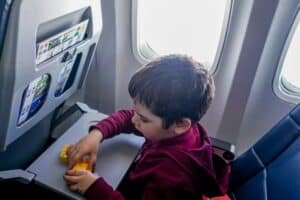
Pro Tip: If you know you will see new sights and sounds on your trip, check some books out at the library and let you child take a deep dive into learning! Headed to the beach? find a book on beach animal-life or tide pools. Flying on a plane? Check out a book about airplanes or clouds!
Learning is a lifelong journey. We would love to help get your little one off to an amazing start here at Clover Hill Children’s Center. Schedule a tour today! We would love to be a part of your little one’s learning adventure.
 4. Prioritize Rest & Quiet Time
Zero to Three reports that overly busy vacation schedules can overwhelm a preschooler’s developing nervous system–often resulting in behavioral issues. Allot time daily for some quiet time to recharge; whether it’s a peaceful naptime, a calm stroller ride, or even simply the opportunity for some quiet play.
Rest time can give preschoolers the space to calm their nervous system, actually rest, as well as allow a reset for parents, caregivers, and teachers. We make a point to have daily quiet time here at Clover Hill Children’s Center. Call today to chat about our learning philosophies, daily schedule, as well as to schedule to come see our facility!
5. Use Screens Sparingly
Screens can be an absolute lifesaver during long waits or while traveling long distances. The American Academy of Pediatrics suggests saving screens for moments when they’re truly needed. Intersperse screen play with interactive play to keep the balance!
Pro Tip: Download educational apps that align with your child’s early childhood education goals. Kahn Academy Kids and PBS Kids are both great (and free!) options!

6. Manage Your Expectations
Even with the very best planning and an extra-large coffee, not everything will go perfectly—and that’s okay! Embrace the hiccups as part of the adventure, because the ultimate goal is bonding and joyful memories together as a family and not a perfectly smooth experience. Setting up realistic expectations in your mind will help you manage the bumps in the road as they come. Remember, a preschooler is never going to do things as quickly as an adult anticipates. So, take a deep breath, give some grace, and allow a little extra time in the schedule for some lolly-gagging.
Developmentally appropriate expectations of your preschooler is key not just while travelling, but every day! We are well versed on milestones and would love to share our knowledge with you here at Clover Hill Children’s Center. Call today to schedule a tour to see how our early childhood educators meet each child where they are and help springboard them to their future.
 Happy Travels!
At times it can be easy to make travelling a checklist of activities and tasks: go to the beach “check!” have ice cream “check!”, see the lions at the zoo “check!” Doing so can miss the moment for the checklist. Remember to take the time to enjoy your family trip, knowing it will look different with littles in tow. Soak up the bonding, their littleness and the opportunity you have to learn together. After all, they are only little once!
Here at Clover Hill Children’s Center we truly are a family and would love to have you be a part! Come for a visit to meet our teachers and see what we are all about!