How Preschool Helps Children Build Strong Social Skills

Within the realm of early childhood education, social skills is a hugely underrated skill. While they can seem to develop naturally, social skills don’t actually simply ‘show up’ one day and need to be learned through practice, repetition, and supportive guidance. In a quality preschool or daycare setting, children have daily, real-life opportunities to practice turn taking, conflict resolution, group play and to simply practice being a good friend.
Let’s take a look at the way preschool supports the development of quality social skills, setting children up with a solid foundation for friendships both now and as they grow.
Schedule a tour with us here at Clover Hill Children’s Center; We would love to show you and your family around our facility and let you see friendships blooming and social skills developing in real-time.
1) Practice With Peers

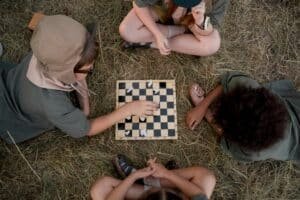
The challenge of being around children of the same age, every day, gives them consistent practice in a multitude of areas like sharing toys, waiting for their turn, listening to someone else’s ideas and feelings, and also joining in group play.
Organizations like NAEYC emphasize that young children develop through active exploration and play—often with peers and caring adults guiding the experience.
If you’re looking for a daycare or preschool that puts emphasis on positive peer relationships, then Clover Hill Children’s Center is for you! Call us today to schedule a time to come see our classrooms, play areas, and ask our early childhood education teachers how they support quality relationships within their classrooms.
2) Hone Communication and Cooperation
Play is the “practice field” for social development. Pretend play, sensory centers, games…all areas of play offer opportunities for social practice. Children have to communicate needs or wants, manage big feelings, think of others, negotiate roles and more–all essential in early childhood education. The American Academy of Pediatrics emphasizes that play is essential for development, playing a large role in both social and emotional well-being.
In a quality daycare or preschool teachers not only supervise and coordinate quality play, but they coach it, as well. Here at Clover Hill Children’s Center, we make a point to model polite words, emotional regulation tactics, and healthy conflict management. Schedule a tour to see and ask about how our early childhood educators guide play to build social skills.

3) Developing “Friendship Skills”
The CDC’s developmental milestone resources specifically encourage teaching children how to play with others. Whether at home, in childcare or within a preschool or daycare environment, early childhood education is the time to learn foundational skills such as using words instead of grabbing, taking turns, and beginning to handle disagreements with support. The development of these ‘friendship skills’ will develop with time and practice, especially as children come to understand how their actions affect others.
These skills are practiced and honed daily here at Clover Hill Children’s Center. Our students are practicing their friendship skills as they line up for outside time, take turns with toys, clean up together, play group games…all the time! Call today to plan a visit and see how we support our students’ development by giving them a safe place to play and learn.
4) Build Conflict Resolution Skills and Confidence
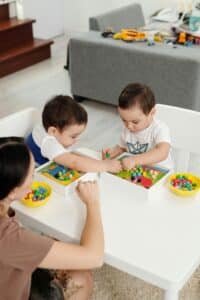 While children are growing and learning, struggles will absolutely come their way. The biggest thing is not the struggle, but how they handle the struggle. With the support of quality teachers and caring adults, children can feel safe to try, fail, and try again.
Harvard’s Center on the Developing Child describes “serve and return” interactions—warm, back-and-forth exchanges with responsive adults—as a key part of healthy development and early social skills. When teachers take the time to kneel down, listen, name feelings and find solutions then children learn that they can communicate and they can repair a problem.
Here at Clover Hill Children’s Center, our teachers know the precious opportunity they have to teach and guide their students in the development of their social skills. We would love to partner with you and your family in your child’s early childhood education journey, simply call us today to schedule a tour and talk about enrollment opportunities.
Building Skills for Life
A strong foundation in early childhood education will help children grow into kind classmates, confident communicators, and capable problem-solvers. Through quality play, guided conflict resolution, and the caring support of a teacher, daycare/childcare or preschool becomes more than supervision, but rather, a training ground for friendships and lifelong social success.
We would love to help set a strong foundation of growth and friendship with a quality early childhood education. Call us up here at Clover Hill Children’s Center and let’s get started, today!
How Daycare Builds Emotional Regulation and Self-Confidence in Young Children

When a family begins to think about daycare of preschool, academics and school readiness are often what first come to mind. While both are vital, an overlooked value of a high-quality childcare is the way in which it supports a child’s emotional development. Emotional regulation and development will serve them well, not just in their early childhood education but through life as a whole. Children have to learn to manage big feelings, navigate social situations and grow their confidence. Within the care of a nurturing and intentional daycare or preschool, they can do just that.
Research shows that children who develop emotional regulation and self-confidence early are better prepared for learning, relationships, and long-term success. Here at Clover Hill Children’s Center, we are very intentional with the emotional development of our students. Call today to set up a tour and watch learning and growth take place!
Consistent Routines Create Emotional Security

Predictable days help young children know what to expect, making them feel safer in their environment. Daily routines like consistent wake up times, meals, playtimes, naps, or even school schedules all help them understand what comes next. In understanding, they have less stress and are less prone to emotional overwhelm and are better able to focus on learning. Research from Harvard University’s Center on the Developing Child points to this, as well, finding that consistent routines and predictable environments help young children build self-regulation skills by strengthening the brain systems responsible for managing emotions, attention, and behavior.
Here at Clover Hill Children’s Center, structured preschool and daycare routines are our bread and butter. Schedule a tour to see the daily rhythms of our various classes and age groups.
Supportive Teachers Guide Emotional Regulation
Relationships help teach children important emotional skills that are foundational to early childhood education. In a quality daycare, childcare, or preschool setting, teachers model calm behavior themselves and will guide students through challenges, naming emotions along the way. These moments, when met with intentionality, teach children to pause, identify how they are feeling, and respond in an appropriate manner. While this may be slow going when they are young, it lays the path for healthy emotional habits as they grow.
The American Academy of Pediatrics emphasizes that warm, responsive caregiver relationships are essential for developing emotional regulation in early childhood.

Our educators here at Clover Hill Children’s Center are very intentional to not only walk your little one through the various frustrations that a day as a preschooler might bring, but they are emotionally intelligent role models, as well. Call us today to learn more about our approach to teaching emotional regulation and to schedule a time to come meet our early childhood education teachers.
Peer Interaction Builds Confidence and Social Skills

According to the organization ZERO TO THREE, social-emotional development — including building relationships and understanding emotions — is a foundation for children’s confidence and ability to connect with others. As children interact with others, they are presented with the opportunity to practice social skills like sharing, turn taking, and conflict resolution. These interactions will help them build empathy, communication skills, and social intelligence that will serve them well from preschool and beyond.
We know the value of positive social interaction here at Clover Hill Children’s Center and are happy to provide our students with lots of opportunities to practice in a safe and controlled environment. Schedule a tour today to get in on the fun!
Play Encourages Emotional Expression
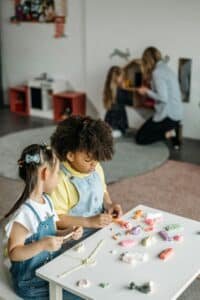
Play is a pivotal tool in early childhood education–from memorizing ABC’s, learning to write, and even in their emotional development, as well! Play opens up a world that allows children to explore emotions that they might not yet be able to verbalize. From pretend play, art, sensory play, music, and more…play offers a slew of opportunities to practice and work through big (or small) feelings.
The National Association for the Education of Young Children (NAEYC) agrees that play is an essential piece for teaching emotional regulation and resilience to children within early childhood education.
Our play-based classrooms here at Clover Hill Children’s Center are particularly designed to encourage and support quality play in our students. Come for a visit and see how we weave play into our daily learning.
Supporting the Whole Child from the Very Beginning
Setting children up right with quality emotional regulation practice and self-confidence building is huge within early childhood education. If you are looking for a quality daycare or preschool that provides structure, intentional play, and encourages good relationships then come see us here at Clover Hill Children’s Center! We would love to partner with your family and set your little one off to a confident, supported start!

New Year, Big Milestones: How to Set Goals With Your Preschooler
The New Year is a blank slate ready for fresh starts and fresh goals. While it is often the adults that come up with a list of new resolutions to embark upon, young children can benefit from goal setting, as well. In preschool, daycare, and childcare settings, goal-setting looks less like a checklist of “to-do’s” and more like growth milestones that come through everyday work and experience. In early childhood education, age and developmentally appropriate goals can be reached with a little help from the adults in each child’s life. In this article, we will see in practical ways what it looks like to set good goals for your preschooler this New Year.

Understanding how to set goals with and for your child helps families and educators work together to support meaningful progress all year long. Here at Clover Hill Children’s Center, collaboration with families to reach and teach goals is a top priority. Call us up today and let’s chat about how we can come alongside your family to support your little one’s early childhood education.
Start With Developmentally Appropriate Goals
Like with anyone, setting goals that are appropriate for where children are at developmentally, will set them up for success. Research from the National Association for the Education of Young Children (NAEYC) emphasizes that developmentally appropriate goals focus on progress—not perfection—and vary from child to child.
Instead of goals like “learn to read,” a preschool-appropriate goal might be:

- Showing interest in books
- Recognizing letters in their name
- Telling stories through pictures
These types of goals honor where children are individually at in their development, while still encouraging healthy growth.
Here at Clover Hill Children’s Center, our preschool and childcare teachers intentionally set developmentally appropriate goals for their entire classroom, with well thought out lesson plans to help to that end. Schedule a tour today to meet our teachers and talk about the plans they have for their classrooms.
Focus on Skills, Not Outcomes
Children are learning and growing at an alarming rate within the realm of early childhood education. One of the most effective ways to set goals for children in this age group is to focus on skills rather than end results. Skills like listening, turn taking, patience, and expressing emotions and feelings all lay a solid foundation for a lifetime of learning. Research shows that early childhood education programs that emphasize social-emotional and self-regulation skills positively influence later academic and life success.
Examples of skill-based goals include:
- Practicing patience during group activities
- Asking for help when needed
- Stating their feelings rather than lashing out
From our infant room to preschool, here at Clover Hill Children’s Center our students are building essential life skills every day. Contact us to learn more about our curriculum, our schedules, our teachers, and our center as a whole!
Make Goals Play-Based and Observable
 Play-based learning allows children to practice goals naturally—without pressure. According to HealthyChildren.org play helps children develop important social-emotional, cognitive, language, and self-regulation skills, and strengthens relationships with caregivers while supporting overall development. A new approach to goal achievement (rather than sitting down to ‘work on goals’) parents, caregivers, and preschool or childcare teachers can observe growth in different ways, such as:
- Building with blocks
- Pretend play
- Outdoor exploration
- Art and sensory activities
Slowing down to observe the growth happening is huge!
Our preschool and childcare programs here at Clover Hill children’s Center use play as the foundation for learning. Call today to schedule a visit and to see how we incorporate intentional play into our lesson plans to help our students reach their goals.
Include Your Child in Simple, Age-Appropriate Ways
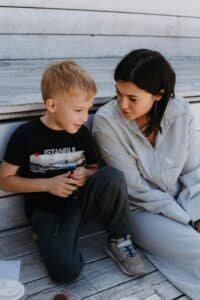
Even young children benefit from being part of the goal-setting process. Not only does it share with them the ways in which they can learn and grow, it also sets a precedent of goal setting and reaching from an early age. While preschoolers may not be able to grasp long-term goals, they can express preferences, interests, and curiosities. Ask questions like:
- “What do you want to learn more about?”
- “What do you want to get better at?”
Questions such as these provide a unique opportunity to learn more about your child or student, as well as encourages the child to take some ownership over their growth. According to Harvard University’s Center on the Developing Child, children learn best when goals are supported through collaborative, responsive relationships with adults.
At Clover Hill Children’s Center, we are happy to partner with families to support the goals of your child and family. Call us today to get started!
Revisit and Celebrate Progress
Just like the ever-changing development of your young child, goals in daycare or preschool should be flexible and evolving. Revisiting goals allows families and teachers to celebrate progress and adjust methods or expectations when necessary. Remembering to celebrate milestones both big and large is important–improved communication, learning to walk, letter recognition, etc….these are all meaningful successes worth celebrating!
This New Year, give your child the gift of growth in a nurturing early childhood education environment. Call us here at Clover Hill Children’s Center to chat about how we can support your child in their development, setting them up for growth that extends far beyond the classroom.

Simple and Enchanting Holiday Activities That Spark Preschool Learning

The holiday season brings with it a special wonder of twinkling lights, cozy gatherings, and magical moments. These moments are prime opportunities to support children’s development through simple activities that will keep their brains and their hands engaged. Perfect for supporting their early childhood development, whether children attend daycare, preschool, or stay home with parents or a caregiver. Keep reading for some enchanting activities that blend the magic of the Christmas season with early learning and development.
Schedule a tour to see our facility, meet our teachers, and see our lesson plans here at Clover Hill Children’s Center. We would love to share how our school brings Christmas magic to life all while nurturing your child’s early childhood development.
1. Outdoor Winter Walks
The world changes in front of your eyes with the onset of winter–there are fewer birds, the plants look different, and there is the exciting chance that snow will blanket it all. Capitalizing on the shift in nature and taking the time for a simple walk to observe holiday decorations, bird tracks, or frosted leaves turns the outdoors into a science lab. Even brief nature explorations reduce stress and improve mood in children, according to research published by the National Library of Medicine. In spending time in and paying attention to nature, children learn to notice patterns, ask questions, and build their observational skills—supporting core pieces of their early childhood education.
When weather permits, we get outside daily, year-round, here at Clover Hill Children’s Center. Call today to ask about our daily classroom schedules and come by for a tour to check out our engaging outdoor play areas!

2. Winter Themed Sensory Bins
Holiday-themed sensory bins filled with items like cotton ball “snow,” arctic creatures, jingle bells, spoons, cups, and evergreen sprigs are all an invitation to explore textures, sounds, and have great imaginative play fun. This type of play is not only soothing but reinforces their fine motor development and cognitive growth, all pivotal in early childhood education. Research from Zero to Three explains that young children learn largely through their senses. As children explore the world around them, they utilize touch, sight, and movement to build their skills and understanding.
We incorporate sensory play in our lives almost daily here at Clover Hill Children’s Center! Call us today to schedule a visit to see our sensory rich learning environments and take a look at our weekly lesson plans!

3. Holiday Baking
 Before you stop reading at the thought of baking with toddlers and preschoolers, you can keep this super simple. At home, in a preschool or daycare classroom, easy recipes that require no oven work are fun and simple ways to enjoy the ‘baking’ process while only needing a bowl or two. Things like no-bake cookies, reindeer trail mix or Christmas Muddy Buddies (see a recipe, here) are simple and don’t require much prep–perfect for preschool ‘baking’. According to the National Association for the Education of Young Children (NAEYC), involving children in simple cooking tasks like baking helps them explore math concepts such as measuring, counting, and sequencing—making everyday activities a natural part of early childhood education.
Here at Clover Hill Children’s Center we love to take advantage of the everyday opportunities to build on our students’ early childhood education. Call today to learn more about our curriculum and ask about how we encourage and build independence in our classrooms.
4. Ornament Crafting
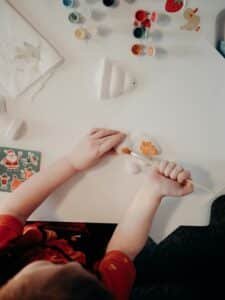
Crafting strengthens hand muscles, bilateral coordination, and attention skills that prepare children for handwriting and other fine motor activities later on. Small movements are doing big work for small muscles. A homemade ornament like a simple salt-dough handprint, beaded candy cane, or popsicle-stick Christmas tree is not only a cute keepsake, but also an on-theme early-childhood-education-boosting activity for preschool classrooms and kitchen tables alike! Parents.com agrees that developing fine motor skills in preschoolers promotes independence and prepares them for tasks such as holding pencils and controlling tools
You can see our students’ hard work displayed for all to see here at Clover Hill Children’s Center–on the walls, bulletin boards, and even occasionally hanging from the ceiling! Schedule a tour to see their hard work first-hand.
5. Holiday Storytime

Reading the same books over and over might seem like a drag to an adult, but for children it is an opportunity to pick up on storytelling skills, basic word formations, rhyming, language, and more! According to Reading Rockets, reading favorite stories again and again helps young children build vocabulary, understand story structure, and recognize language patterns—making cozy holiday story time both magical and meaningful for early literacy development. Some excellent suggestions are: Snowmen at Night, The Mitten, or Bear Stays Up for Christmas.
We love story time at Clover Hill Children’s Center, so much that it is a part of our daily routine. Come by for a tour and ask our lovely early childhood educators about their classes’ favorites!
Magical Memories for the Holidays
Children are constantly learning. Whether planning activities for a childcare or preschool classroom or looking to keep your little one busy during these colder months, curating festive activities to support their early childhood development can be simple, quick, and provide the chance for some cozy and meaningful connection, as well.
We would love to welcome you and your family here at Clover Hill Children’s Center. Contact us today to learn more about enrollment and to make us a part of your Christmas and holiday plans, today!
Take the Stress Out of Holiday Meals with Preschoolers

Navigating Holiday Meals with Children
The Holidays bring about a lot of group gatherings and special food that is not typically enjoyed all year long. Maybe it’s a Thanksgiving turkey, a Christmas ham, or the special fruit cake that Aunt Beth brings every year to the family meal, food can be a part of our holiday traditions. For little ones, some foods can be a challenge as-is, let alone if they are only eaten at one time of the year. Rather than barreling through and letting your child skip meals (and end up very hungry and grumpy) let’s look at some helpful and effective strategies to help keep bellies happy and full during this season of different foods and flavors.
Here at Clover Hill Children’s Center, we know the effective of predictability and routine within early childhood education–not just in activities, but in food, as well! Call today to schedule a tour to see our classroom routines from age to age and to take a look at our weekly menu and see what we have cooking!

1. Offer Familiar Foods Alongside New Ones
New foods (new anything) can feel overwhelming, especially to a small child. Rather than load a child’s plate up with food they’ve never seen or rarely eat, mix in a balance of familiar with just one or two new “learning” foods; This will help children feel safer about what is on their plate and in turn more inclined to try the new food. Dietitian Ellyn Satter’s Division of Responsibility suggests the mindset that parents decide what is served and when, and children decide whether and how much to ear. In embracing this mindset, the pressure around a meal decreases and in turn encourages curiosity and eating.
Wonder what meals and snacks we offer our students here at Clover Hill Children’s Center? Call us up today to see what’s on the menu!
2. Skip the Pressure
Children can smell pressure. Well, not really, but they are very sensitive to adults’ emotions and attitudes. Rather than serving a heap of pressure with the holiday meal, add a dollop of patience and some positive food-talk. Keep the conversation around food neutral and relaxed–rather than saying “finish your plate” or “eat your vegetables” (which can be overwhelming to a preschool-aged-child in an already overwhelming environment) you could say “here’s roasted sweet potato, it smells warm and sweet.” This kind of neutral language helps little one’s feel safe exploring foods, rather than anxious about from the pressure and desire to please. Research shows that how parents talk about food—the tone, the words, the lack of labels (like “good” or “bad”)—directly influences children’s eating behaviors–important for all adults in a child’s life whether its mom and dad or your child’s daycare or childcare teacher, as well!
Our teachers here at Clover Hill Children’s Center are very intentional to present quality to food to your little one without the pressure of needing to finish their plates. Call us today to ask about our nutrition guidelines and the various meals we serve here at Clover Hill Children’s Center.
3. Practice “Tiny Taste” Exposure

Children may simply need multiple, neutral exposures to a new food before willingly reaching for or trying it. The organization, Healthy Eating Research, has found that children often need 8–15 or more calm, pressure-free encounters with a previously disliked or unfamiliar food before they’re comfortable tasting or accepting it. In childcare and daycare settings, these exposures can be as simple as seeing a food on the table, smelling it during meal prep, or even helping cook it alongside a trusted adult.
If it helps, you can invite your child to take a gentle “no-thank-you bite,” which lets them explore a flavor without the pressure of finishing a full serving. This simple approach can reduce anxiety and build confidence during busy holiday meals.
Exposing children to high-quality, approachable foods is a core part of early childhood education, and it’s something we prioritize every day at Clover Hill Children’s Center. We take both nutrition and a positive mealtime environment seriously. Schedule a tour today to meet our chef, explore our nurturing daycare classrooms, and peek at our thoughtfully planned meal rotation!
4. Let Them Help in the Kitchen

When kids help prepare, plan, or even shop for food, they are far more inclined to taste what they’ve helped create. While involving preschoolers in the kitchen can feel a bit chaotic at times, even simple tasks—like choosing a recipe, sprinkling shredded cheese, or washing vegetables—give them a sense of ownership and pride. Research from Utah State University Extension shows that children who participate in cooking are more willing to try new foods and often increase their intake of healthier options.
These small moments of participation build confidence, independence, and curiosity—skills that serve children well not just at the dinner table, but throughout their early childhood education journey. Here at Clover Hill Children’s Center, we make a point to stoke the fire of confidence and independence early! Come for a visit and see how our educators are helping their students grow into the leaders of tomorrow.
Setting up for an Attitude of Gratitude
Holidays can be a time of unfamiliar foods and unpredictable schedules, but they also offer wonderful opportunities of connection, patience, and wonder. Embrace the magic and navigate the chaos while keeping some realistic expectations for your preschooler. Keep the pressure low and embrace the memories instead of the stress. With each positive experience, children build confidence, curiosity, and healthy habits that last long beyond the season.
Looking for an early childhood education home? We would love to have your family join us here at Clover Hill Children’s Center. Call today to schedule a tour and see what we are all about!

The Power of Predictability for Preschoolers
Why Predictability Comforts Children
Predictability brings security–especially for preschool-aged littles. When children feel safe and secure, they are also ready to learn, play, and grow. In childcare or daycare settings or even at home, consistent routines help reduce stress as well as set the stage for effective early childhood learning! Let’s take a look at some of the research backed reasons that routines help little ones feel comfortable as well as some helpful tips for starting a solid routine in your home, daycare or childcare classroom.
Call us today here at Clover Hill Children’s Center and see how we create calm and confident days with an engaging and predictable schedule. Schedule a tour to see our classroom schedules and set ups from class to class.

1. Reduce Stress and Support Brain Development
For preschool-aged children, everything is new. They are constantly taking in new sights, sounds, and experiences, which can be a lot for their small bodies and can feel overwhelming. Predictable routines help ease that overwhelm. In fact, research on the Ready4Routines program found that when families used simple, repeated daily routines, children showed stronger executive function skills—including better focus, emotional regulation, and flexible thinking.
When children know what to expect from their day, their nervous systems can relax. A calm brain is better able to learn, process language, and build memory.
We would love to share our routines with you! Schedule a time to come tour with us here at Clover Hill Children’s Center and see our daily rhythms in person.
2. Predictability Builds Emotional Security

For infants, toddlers, and preschoolers, routines send a powerful message: You are safe, cared for, and not alone. The organization Zero to Three emphasizes this, finding that daily rituals help children feel secure and connected to caregivers. This emotional safety wraps around children like a warm blanket, giving them a foundation for confidence, curiosity, and positive behavior. It just makes sense. When you feel safe and secure in your body and relationships, you are much more likely to branch out to try new things or meet new people.
Our schedules here at Clover Hill Children’s Center are everything–keeping our days moving smoothly and helping our students know what to expect. Come for a tour today and see how our routines vary between the different age groups and classrooms.
3. Routines Improve Sleep and Behavior
Research shows that consistent routines improve sleep, and sleep is everything. Getting adequate sleep improves mood, focus, and supports emotional regulation. A large international study published in The Journal Sleep Medicine found that when families follow a simple, consistent bedtime routine, children fall asleep faster, wake less during the night, and show calmer, more positive behavior the next day. Sounds like a great combo, whether you have to rush off daycare or childcare in the morning, or start the day early (because, kids) at home.
We are up and at ’em early here at Clover Hill Children’s Center and would love to be a part of your preschooler’s routine. Call us today and schedule a tour to see how we would be a great fit for your family!
Tips for Building Routines at Home
 Routines don’t need to be complicated and revolve around daily life! Whether your routine includes getting out the door to daycare or preschool or making sure everyone is dressed and brushed for a day at home, a routine based on simple activities can be easy to implement and beneficial in the long run.
We know that routines make a difference here at Clover Hill Children’s Center! We keep the same routine daily within our early childhood education classrooms. While there is variance in what happens within our blocks of structured learning, play, and art time, the time frames are set to erase any uncertainty our little learners might feel. Schedule a visit to see our routines in action!
Tip 1: Start with One Anchor Routine
Rather than start with a new structure for the entire day, choose just one part of the day to make predictable—morning, mealtime, after school, or bedtime, etc. Consistency, rather than perfection, will make the difference over time. Use the same simple steps each day; for example, a morning before heading out the door for school could look like:
Breakfast → Dressed → Quiet Play → Car for Preschool/Daycare

Tip 2: Use Visual Cues and Songs for Transitions
Transitions are hard on littles and the cause of many meltdowns within the realm of early childhood education–children grow upset because they don’t want to or didn’t understand that what they’re doing (playing, bathing, eating, etc.) is coming to an end. Young children often understand pictures and songs better than spoken instructions, so rather than abruptly transitioning or using a lot of verbal warnings, try songs or picture cue cards. To highlight this, a recent study found that using visual activity schedules helped preschoolers move between tasks more smoothly and with less fuss. A picture schedule that lets children clearly see what they can expect next, or a singsong tune that reminds them to finish their play because playtime is over, can help ease the transition and let preschoolers know what to expect.
We utilize both of these approaches here at Clover Hill Children’s Center. Call us today to schedule a visit, our teachers would love to share their favorite helpers to help manage transitions and set expectations within their classrooms.
Tip 3: Repeat Connection Rituals
 Rituals such as a special handshake at drop-off, reading the same book before nap, or saying goodnight to their stuffed animals before bed can actually give emotional structure to the say. Even something as simple as a 30-second handshake added into the routine will build connection and help children feel secure and valued.
Let us know your family rituals! We are happy to help support you and your little one to make drop off a smooth experience for both. Call us today to join the family here at Clover Hill Children’s Center!
Predictability Builds Peace
Routines don’t make childhood rigid; they make it reassuring. Predictability turns chaos into calm, worry into wonder, and daily moments into milestones. Within our classrooms here at Clover Hill Children’s Center, every smile, snack, and story time follows a rhythm designed to help little hearts feel safe and ready to learn. Schedule a tour to come see how we strive to create an environment that children can play and learn in!