The New Year is a blank slate ready for fresh starts and fresh goals. While it is often the adults that come up with a list of new resolutions to embark upon, young children can benefit from goal setting, as well. In preschool, daycare, and childcare settings, goal-setting looks less like a checklist of “to-do’s” and more like growth milestones that come through everyday work and experience. In early childhood education, age and developmentally appropriate goals can be reached with a little help from the adults in each child’s life. In this article, we will see in practical ways what it looks like to set good goals for your preschooler this New Year.

Understanding how to set goals with and for your child helps families and educators work together to support meaningful progress all year long. Here at Clover Hill Children’s Center, collaboration with families to reach and teach goals is a top priority. Call us up today and let’s chat about how we can come alongside your family to support your little one’s early childhood education.
Start With Developmentally Appropriate Goals
Like with anyone, setting goals that are appropriate for where children are at developmentally, will set them up for success. Research from the National Association for the Education of Young Children (NAEYC) emphasizes that developmentally appropriate goals focus on progress—not perfection—and vary from child to child.
Instead of goals like “learn to read,” a preschool-appropriate goal might be:
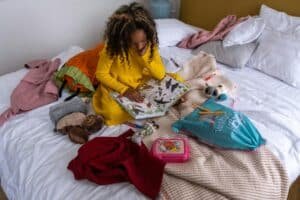
- Showing interest in books
- Recognizing letters in their name
- Telling stories through pictures
These types of goals honor where children are individually at in their development, while still encouraging healthy growth.
Here at Clover Hill Children’s Center, our preschool and childcare teachers intentionally set developmentally appropriate goals for their entire classroom, with well thought out lesson plans to help to that end. Schedule a tour today to meet our teachers and talk about the plans they have for their classrooms.
Focus on Skills, Not Outcomes
Children are learning and growing at an alarming rate within the realm of early childhood education. One of the most effective ways to set goals for children in this age group is to focus on skills rather than end results. Skills like listening, turn taking, patience, and expressing emotions and feelings all lay a solid foundation for a lifetime of learning. Research shows that early childhood education programs that emphasize social-emotional and self-regulation skills positively influence later academic and life success.
Examples of skill-based goals include:
- Practicing patience during group activities
- Asking for help when needed
- Stating their feelings rather than lashing out
From our infant room to preschool, here at Clover Hill Children’s Center our students are building essential life skills every day. Contact us to learn more about our curriculum, our schedules, our teachers, and our center as a whole!
Make Goals Play-Based and Observable
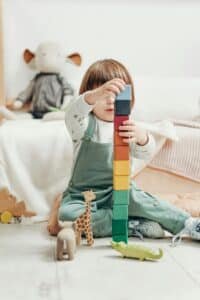 Play-based learning allows children to practice goals naturally—without pressure. According to HealthyChildren.org play helps children develop important social-emotional, cognitive, language, and self-regulation skills, and strengthens relationships with caregivers while supporting overall development. A new approach to goal achievement (rather than sitting down to ‘work on goals’) parents, caregivers, and preschool or childcare teachers can observe growth in different ways, such as:
- Building with blocks
- Pretend play
- Outdoor exploration
- Art and sensory activities
Slowing down to observe the growth happening is huge!
Our preschool and childcare programs here at Clover Hill children’s Center use play as the foundation for learning. Call today to schedule a visit and to see how we incorporate intentional play into our lesson plans to help our students reach their goals.
Include Your Child in Simple, Age-Appropriate Ways
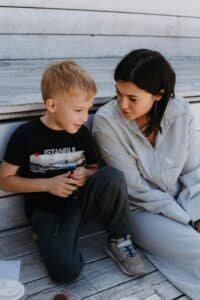
Even young children benefit from being part of the goal-setting process. Not only does it share with them the ways in which they can learn and grow, it also sets a precedent of goal setting and reaching from an early age. While preschoolers may not be able to grasp long-term goals, they can express preferences, interests, and curiosities. Ask questions like:
- “What do you want to learn more about?”
- “What do you want to get better at?”
Questions such as these provide a unique opportunity to learn more about your child or student, as well as encourages the child to take some ownership over their growth. According to Harvard University’s Center on the Developing Child, children learn best when goals are supported through collaborative, responsive relationships with adults.
At Clover Hill Children’s Center, we are happy to partner with families to support the goals of your child and family. Call us today to get started!
Revisit and Celebrate Progress
Just like the ever-changing development of your young child, goals in daycare or preschool should be flexible and evolving. Revisiting goals allows families and teachers to celebrate progress and adjust methods or expectations when necessary. Remembering to celebrate milestones both big and large is important–improved communication, learning to walk, letter recognition, etc….these are all meaningful successes worth celebrating!
This New Year, give your child the gift of growth in a nurturing early childhood education environment. Call us here at Clover Hill Children’s Center to chat about how we can support your child in their development, setting them up for growth that extends far beyond the classroom.