
The Beneficial Nature of Poetry on Learning to Read
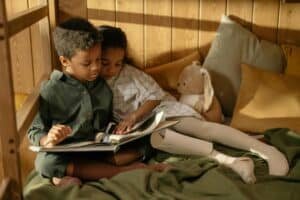
Poems are a playful way to help grow strong reading skills. Musical lines found in nursery rhymes, chants, and short books can pack a surprising literary punch! Let’s take a look at some of the research behind the benefits of poetry on early reading preparedness as well as some simple ways to begin incorporating it to your day–whether at home, preschool, and within daycare or childcare settings.
We use rhymes and rhythm daily here at Clover Hill Children’s Center! These are excellent for helping our students learn and keeping our days on track. Schedule a tour today to come by and hear some of our favorites!
1) Builds Phonetic Awareness
Rhyme, rhythm, alliteration, and syllable patterns are all tools utilized within poetry that can help children learn how language is put together. The Cambridge University Press found that learning nursery rhymes helps children develop a stronger sensitivity to rhyme and individual speech sounds–helping lay a foundation for future reading and spelling!
Clover Hill Children’s Center is a perfect place for practicing pre-reading and play! Call today to schedule a visit to come for a tour and check out our plans, curriculum, and to meet our lovely early childhood education teachers!
 2) Irresistible and Effective Sound Play
Have you ever gotten a rhyme stuck in your head, or utilized a quick one to help you learn? How about the quick rhyme: “Righty Tighty, Lefty, Loosey.” It’s short, sweet, and effective example of sound play as a memory aid. Using this as an excellent example, poems are short and musical, making them easy for children to repeat and memorize. The International Literacy Association asserts that each playful repetition helps children tune into onsets, rimes, and phonemes—core components of phonological awareness, which research has shown to be essential for decoding, reading success, and spelling in early learners.
Short songs and playful rhymes are incredibly helpful within early childhood education not just for learning, but for transitions, as well! Call today to see about our openings and to come by and learn some of our favorite rhymes and songs!
3) Supercharge Vocabulary
Poetry introduces rich vocabulary such as “twinkle”, “shimmer”, and even lovely metaphors such as “like a diamond in the sky.” This helps build strong language skills that follows children into their future reading and writing. According to AAP Publications, pediatric experts recommend frequent reading-aloud because it boosts language, cognition, and social-emotional bonds—the foundation for later literacy.
Here at Clover Hill Children’s Center we love learning–through play, reading, outside play, and even through sweet rhymes and songs! Call today to ask about our openings and stop by to meet our early childhood educators and see learning in action!
Quick Ways to Incorporate Poetry

Rhyming Circle Time: Clap beats, whisper lines, and swap silly rhyming words into classic songs (“cat/hat/bat”). This is a fun and silly way to tune the ear to hear sound patterns. (Source)
-
Alliteration Day: Pick a “sound of the day” and have children bring in or collect items (or pictures of items) that start with it around the room (b–blocks, book, basket). Research shows a link between honing these skills and reading later on (Source).
-
Family Poem Cards: Get the whole family in on the fun by sending home one short poem with activity ideas like singing the poem in a silly voice or in the car whenever you go under a bridge–keep it fun! Research done by the American Academy of Pediatrics notes that shared reading in daily life has amazing benefits.
-
Poetry Corners: Post a few of your favorite poems at eye level with some toys that might match the poem and invite kids to “read” by reciting from memory.
For example, if using the poem The Itsy Bitsy Spider, include bug toys and a tube that they can play with while they ‘read’
Setting our students up to read and to love reading is very important to us here at Clover Hill Children’s Center. We would love to show you around our lovely facility and share some of our favorite children’s books with you. Call today to check on our classroom openings and to schedule a tour!
Rhymes Matter
Poetry isn’t simply cute verses for early childhood education, but rather, it is a research-backed accelerator for reading readiness. Poetry helps with phonological awareness, vocabulary, creativity, and in building a joyful love for reading. Plus, good poetry is simply, lovely. A rhyme a day can help reading to stay. Or, something like that.
Cheesy attempts at rhymes aside, poetry as a whole is a beautiful support of reading, especially for young children! Come for a tour here at Clover Hill Children’s Center so we can share our love for learning and our favorite techniques for preparing children to be lifelong readers and learners.